Electronic waste removal Lambeth what to know
Posted on 19/10/2026
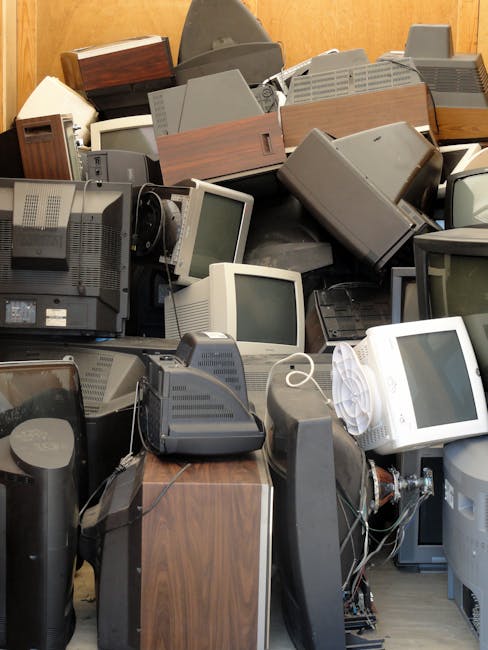
If you have old laptops, broken chargers, tangled cables, or a dead TV taking up space, you are probably looking for a clear, local answer to Electronic waste removal Lambeth what to know. Fair enough. E-waste is one of those jobs that looks simple until you realise there are data risks, recycling rules, bulky items, and a few surprisingly awkward bits of kit to move.
This guide explains what electronic waste removal actually involves, how collections usually work in Lambeth, what to check before booking, and how to avoid the common slip-ups that cost time or money. It is written to help households, landlords, offices, and small businesses make a sensible decision without overthinking it. Because let's face it, nobody wants a pile of old tech lingering in the hallway for another month.
Along the way, you will also see where electronic waste fits alongside broader clearance and disposal services, including general waste disposal in Lambeth, appliance disposal, and recycling and sustainability. That makes it easier to choose a service that matches the real job, not just the label on the page.
Why Electronic waste removal Lambeth what to know Matters
Electronic waste is not just "old stuff". It usually contains metals, plastics, circuit boards, batteries, screens, and sometimes bits that can be hazardous if broken, crushed, or stored badly. A cracked monitor in a cupboard is not dramatic on its own, but a few years of that kind of clutter can become a mess fast. The same applies to forgotten routers, printers, desktop towers, and office phones. They pile up quietly, then all at once you need them gone.
In Lambeth, the topic matters for three simple reasons. First, space is at a premium, especially in flats, converted buildings, and busy office settings. Second, electrical equipment can hold personal or business data, which means disposal needs a bit of thought. Third, good recycling practice helps keep reusable components out of general rubbish streams. If you want to understand the wider clearance landscape too, the site's services overview is a useful place to see how e-waste fits with other clearance needs.
There is also a practical side that people sometimes miss. A lot of what gets called "electronic waste" is not actually useless. Some items can be tested, refurbished, donated, or stripped for parts. Others need specialist handling because of batteries, coolant, or fragile components. So the big question is not just "how do I remove it?" but "what is the cleanest, safest route for this particular item?"
Expert summary: the best e-waste removal is not the fastest collection alone. It is the one that protects your data, keeps items separated properly, and sends reusable materials into the right recycling stream.
How Electronic waste removal Lambeth what to know Works
Most e-waste removal jobs follow a fairly simple pattern, though the details matter. You identify the items, decide whether anything needs data removal or separation, get a quote or collection slot, and then the team collects, sorts, and transfers the waste for processing. Sounds straightforward. Usually it is. But the quality of the service depends on what happens in the middle.
Typical collection process
- Assessment - You list the items, ideally with photos if there are bulky or awkward pieces.
- Preparation - You disconnect equipment, gather cables, and remove anything confidential.
- Collection - The team removes items from the property, stairwell, office, or storage space.
- Sorting - Items are separated for reuse, recycling, or proper disposal.
- Transfer - Materials go to the appropriate facility or treatment route.
For mixed household jobs, e-waste is often collected alongside other rubbish, but it is still worth separating clearly where you can. If you are clearing a flat after a move, for example, an old laptop, a broken desk lamp, a printer, and a microwave do not all belong in the same mental pile. The practical route is often to combine e-waste with house clearance in Lambeth or, for larger business jobs, office clearance services.
One useful habit is to make a "keep, wipe, recycle, remove" list before the team arrives. It saves those awkward moments where someone points at a device and says, "Actually, I might need that cable." We have all been there. Or close enough.
What counts as electronic waste?
- Computers, laptops, tablets, monitors, and keyboards
- Printers, scanners, copiers, and shredders
- Phones, routers, modems, and networking equipment
- TVs, speakers, games consoles, and media devices
- Chargers, power banks, cables, adapters, and small gadgets
- Small appliances with electrical components
- Batteries and battery-powered devices, where accepted
Some items are classed as e-waste even when they are not obviously "techy". Think smart home gadgets, electric toothbrushes, or kitchen devices with circuitry. That is why the best waste teams ask questions rather than guessing.
Key Benefits and Practical Advantages
People often book e-waste removal for one obvious reason: to clear space. Fair enough. But the better services usually deliver a few more benefits than that.
- Less clutter, faster - Old equipment disappears in one visit instead of sitting around for months.
- Safer storage areas - You reduce trip hazards, cable tangles, and accidental breakage.
- Better data protection - A proper process helps you think about hard drives, memory cards, and login data.
- Improved recycling outcomes - Many electrical items can be broken down for materials recovery.
- Easier property handovers - Particularly useful for landlords, letting agents, and offices between tenants.
- Less stress for staff or residents - One organised collection is easier than several disposal attempts.
There is also a subtle benefit that people do not always mention: decision fatigue goes down. Once you know the disposal route, you stop leaving the old monitor in the corner "for later". Later never comes. Well, not on its own anyway.
For bigger mixed clearances, the convenience can be even more noticeable. A business closing one floor of an office may need e-waste removal alongside desks, filing cabinets, and furniture. In that case, it helps to understand related services such as commercial waste removal in Lambeth and furniture disposal, because the cleanest solution is often a combined one.
Who This Is For and When It Makes Sense
Electronic waste removal is useful for a broad mix of people, and not just businesses with server rooms. In Lambeth, we see the same themes come up again and again. A move is happening. A tenancy is ending. An office is being reconfigured. A spare room has become a gadget graveyard. It happens quietly, then suddenly the room looks smaller than it should.
Common users of e-waste removal
- Homeowners and tenants with broken or obsolete electronics
- Landlords and letting agents clearing behind outgoing tenants
- Offices and co-working spaces replacing old equipment
- Retailers and traders removing tills, screens, terminals, and accessories
- Students and sharers who have accumulated duplicate devices and peripherals
- Property managers handling mixed clearances after refurbishments
It makes sense when the item is too bulky for standard household disposal, too sensitive for casual dumping, or simply too awkward to transport yourself. If your building has narrow staircases or limited lift access, that practical issue alone can make a collection service worth it. In some parts of Lambeth, that is a very real consideration.
And if you are already clearing other items at the same time, you may want to pair e-waste with waste clearance or rubbish collection so the whole job is finished in one go.
Step-by-Step Guidance
If you want to handle e-waste removal properly, the easiest approach is to work in a simple sequence. A lot of problems happen when people leap straight to booking without checking what they actually have. No judgement, but this is where confusion tends to begin.
1) Make a complete inventory
Walk through the space and list every electrical item you want removed. Include chargers, mice, keyboards, old screens, wall-mounted devices, and forgotten boxes in cupboards. Take photos if anything is large, fragile, or oddly shaped.
2) Separate data-bearing equipment
Laptops, desktops, phones, tablets, and storage devices deserve extra attention. If the device has personal or client information, decide whether you need to wipe it, remove the storage drive, or arrange secure handling. Do not leave that decision until the morning of collection.
3) Check whether batteries are inside
Devices with lithium batteries or removable battery packs can affect how the item is handled. If you know a device contains a battery, mention it. A good collector will tell you what to leave in place and what to separate.
4) Decide whether items can be reused
Some electronics are fine to donate or resell. Others are simply done. If the screen is cracked or the battery is swollen, that is not a refurb job. If the device still powers on and looks clean, reuse may be possible. That small judgement call can make a difference.
5) Arrange the collection around access
Think about parking, stair access, lift size, and timing. A ground-floor collection is easy; a fifth-floor walk-up with a broken lift is a different story. Mention access issues early so the team can plan properly.
6) Ask what happens after collection
It is reasonable to ask whether items are recycled, assessed for reuse, or handled through a wider disposal stream. Transparency matters. If you are comparing service options, the site's pricing and quotes page can help you understand how services are typically structured before you decide.
Expert Tips for Better Results
Here are the small details that often separate a smooth e-waste pickup from a messy one. None of these are dramatic, but together they save time and stress.
- Label items before collection - A strip of tape marked "keep" or "remove" avoids confusion.
- Bundle cables together - Loose cords eat time and tangle around everything else.
- Photograph serial numbers where needed - Useful for business asset records or warranty checks.
- Keep chargers with the right device - It helps with reuse, testing, or resale.
- Tell the collector about stairs, basements, or tight entrances - Honest access details prevent delays.
- Schedule alongside other clearance tasks - Combining jobs can make the whole day easier.
A lot of people forget that e-waste is often only part of a bigger clutter problem. If you are clearing a loft, for instance, electronics often sit beside boxes, lamps, and old furniture. In that case, loft clearance in Lambeth can be more efficient than booking separate visits.
One more thing: if you are dealing with a fast move-out or a tight turnaround, aim to sort items the evening before. A ten-minute sort in the evening can save a small headache the next day. Strange how that works, really.
Common Mistakes to Avoid
Most e-waste problems are avoidable. They usually come from rushing, assuming, or trying to treat everything as ordinary rubbish. That is where things go sideways.
- Leaving data on devices - Old devices may still contain personal or business information.
- Mixing everything together - Batteries, screens, cables, and normal rubbish should not all be treated the same way.
- Forgetting large or awkward items - Monitors, printers, and desktop towers are easy to overlook.
- Not checking access - A collection can stall if parking or entry was not planned.
- Booking the wrong service type - Some jobs need office clearance or a full waste disposal service, not a tiny single-item pickup.
- Assuming "electrical" means "anywhere" - Not every device belongs in the same stream, especially if it includes a battery or special components.
A very common one is people keeping old tech "just in case". Just in case what? That it becomes vintage? Maybe. More often it just becomes dustier. If the item is clearly done, it is usually kinder to yourself to let it go.
If your project is time-sensitive, it may help to review common mistakes when booking Lambeth waste removal services before you commit. It is a short read, but it covers some practical traps people hit when they are in a hurry.
Tools, Resources and Recommendations
You do not need specialist gear to prepare e-waste for removal, but a few basic tools make life easier. Nothing fancy. Just practical stuff that you probably already have in a drawer somewhere.
- Labels or masking tape for sorting keep/remove items
- Marker pen for marking devices, boxes, and cables
- Phone camera for photos of items, serials, and condition
- Screwdriver set if you need to detach stands, wall mounts, or accessories
- Boxes or bags for cables, remotes, and small peripherals
- Microfibre cloth if you want to quickly wipe dust from items intended for reuse
For recommendations, the most useful approach is to choose the route that matches the condition of the item. Clean and functional? Consider reuse. Broken and obsolete? Recycle or remove. Mixed office clear-out? Use a broader service rather than forcing each item into a separate plan. And if the wider job includes office contents, a look at Lambeth office clearance can be helpful, even if the collection is not just electronics.
If you are comparing services, it can also be worth looking at the company's approach to safety and handling. The insurance and safety information gives a clearer sense of what to expect when items are being carried through shared spaces or managed in bulk.
Law, Compliance, Standards, or Best Practice
Electronic waste should be handled carefully, and in the UK there are established expectations around proper waste handling, recycling, and responsible transfer. Without getting lost in legal detail, the main point is this: e-waste should not be treated like ordinary household rubbish if there is a better route available.
Best practice usually includes using a waste carrier who can collect and move the material responsibly, separating items where required, and avoiding careless disposal of anything that may contain personal data. For businesses, that data point matters a lot. A wiped device is not always a secure device, so internal procedures matter too. It is one of those boring-but-important things.
If you want reassurance about responsible handling, the page on waste carrier licence and compliance is useful background. It explains why proper handling matters and what a trustworthy waste operator should be able to show in principle. You should also be comfortable with the provider's terms and conditions and privacy policy if personal or business data is involved.
For most readers, the practical rule is simple: do not dump electronic items in normal refuse if there is a proper recycling or collection route available, and do not hand over sensitive devices without knowing how they will be managed. That is the baseline.
Options, Methods, or Comparison Table
There are usually several ways to deal with e-waste in Lambeth, and the best one depends on quantity, condition, and urgency. Here is a clear comparison.
| Method | Best for | Pros | Limitations |
|---|---|---|---|
| Reuse or donation | Working devices in decent condition | Lowest waste, sometimes helps others | Not suitable for broken, outdated, or data-sensitive items |
| Dedicated e-waste removal | Old tech, mixed electronics, data-bearing items | Convenient, organised, suitable for bulk removal | May need more planning for access or sorting |
| General waste collection | Mixed rubbish with a few small items only | Simple for broader clearances | Not ideal for specialist electronics or storage devices |
| Office clearance | Business upgrades, deskside kit, IT refreshes | Efficient for larger volumes | Needs more coordination and asset awareness |
| Appliance or white-goods service | Electrical items with motors or bulky components | Good for larger household equipment | Not the right fit for small electronics |
If you are not sure which route fits, start by asking two questions: is the item data-sensitive, and is it part of a larger clearance? Those two answers usually point you in the right direction. Sometimes very quickly, too.
Case Study or Real-World Example
A small office near central Lambeth recently needed to clear out a mix of outdated monitors, docking stations, desktop towers, and a handful of routers after a workspace redesign. Nothing dramatic. Just the usual office shuffle. But the team had one concern: there were also old client files stored on some of the devices, and they wanted the room cleared before new furniture arrived.
The sensible approach was to separate the project into two parts. First, all data-bearing devices were identified and handled carefully by the business. Then the remaining electronics were grouped with desks, chairs, and a few storage items so the clearance could happen in one efficient visit. That avoided multiple trips, reduced disruption, and meant the office was ready on time rather than half-cleared for three more days.
What made the difference was not speed alone. It was the preparation. The team knew what stayed, what went, and what needed privacy attention. That is the bit people often skip. Then they wonder why the day feels messy.
For a similar mixed job, pairing electronics with a wider commercial waste removal approach or a broader waste clearance service can save a lot of hassle.
Practical Checklist
Use this checklist before booking or on the day of collection.
- List every item you want removed, including cables and small accessories.
- Separate anything that contains personal, client, or financial data.
- Decide whether any devices can be reused, donated, or resold.
- Check for batteries, cracked screens, or damaged casings.
- Take photos of larger items or awkward access points.
- Confirm lift access, parking, and stair conditions.
- Group items in one area if possible.
- Keep chargers with the correct devices.
- Ask about recycling, reuse, and handling of sensitive equipment.
- Make sure the service you choose fits the scale of the job.
Quick takeaway: the smoother e-waste removal almost always starts before the van arrives. Ten minutes of sorting can save an hour of back-and-forth. Maybe more, if the cables have decided to become a nest.
Conclusion
Electronic waste removal in Lambeth is really about three things: sorting the right items, handling data and safety properly, and choosing a disposal route that fits the job. Once you understand that, the process becomes much less daunting. You do not need to become an expert in recycling streams or waste codes. You just need a sensible plan and a service that knows what it is doing.
For homes, it can mean finally clearing the spare room or hallway. For offices, it can mean a clean reset without hidden clutter hanging around. And for landlords or property managers, it can help keep move-outs efficient and straightforward. The main thing is not to leave it until the last possible minute. That is usually when the awkwardness starts.
If you are comparing options, looking at broader services such as recycling and sustainability and the company's payment and security information can help you make a calmer decision. And if you need a complete clearance rather than just a few devices, the right removal partner can make the whole thing feel much lighter, almost oddly so.
Get a free quote today and see how much you can save.
Sometimes the smallest clear-out is the one that makes the whole room feel different. That fresh, open feeling is hard to beat.